Ocean Block Shoot
HM Games Pty LtdPuzzle
4.7494.00 Reviews
- Version
- 1.6.0
- Installs
- 500.00K
- Age Rating
- Everyone
Screenshots
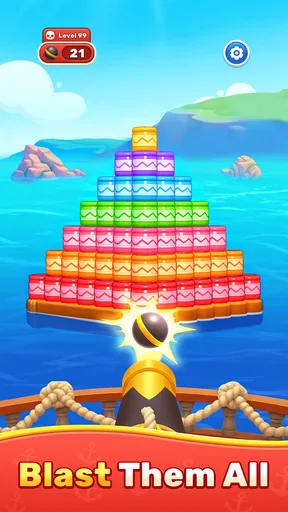
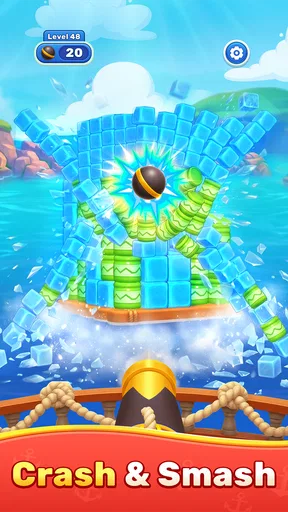
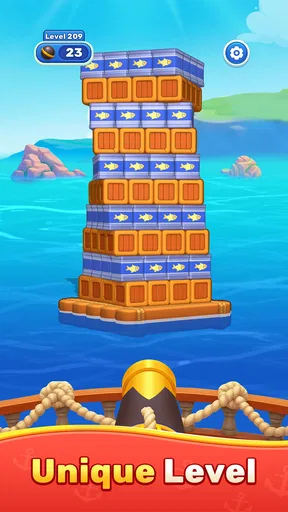
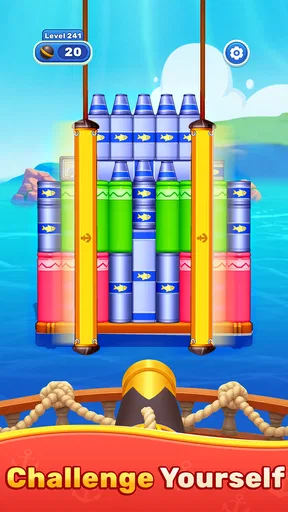
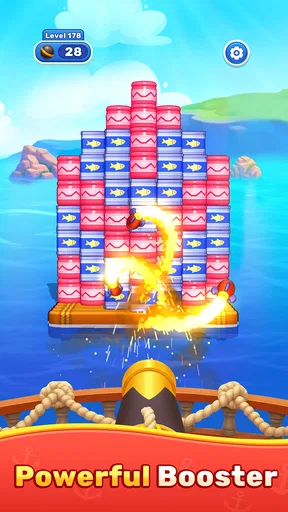
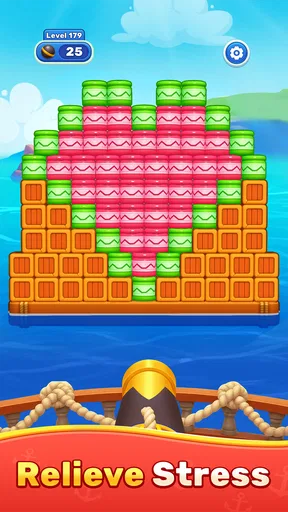
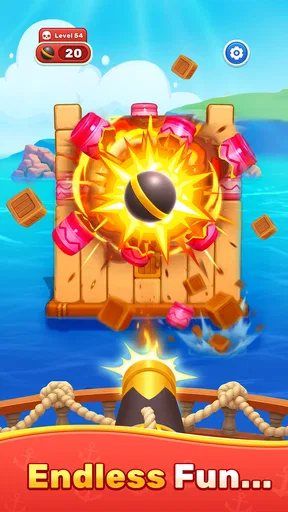
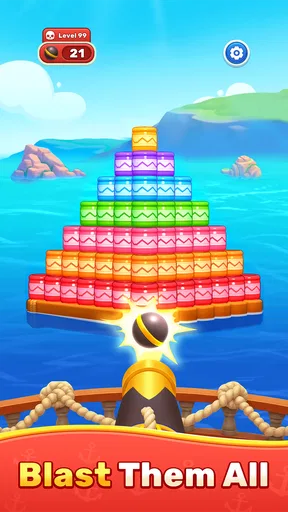
Our Review of Ocean Block Shoot
 Analysis by Appyee
Ocean Block Shoot is the kind of puzzle game I open when I want a quick, focused break rather than a long story or a complicated ruleset. The idea is easy to understand: line up a shot, break blocks, and work through the board with as much care as possible. That simplicity is its biggest attraction, but it also means your enjoyment depends heavily on whether you like repeating a compact aiming challenge and learning from small mistakes.
I spent time looking at it as both a casual game and a practical choice for short sessions. It comes from HM Games Pty Ltd, is free to start, and is suitable for Everyone. Its audience is already substantial, with over 500 thousand installs and a 4.7 average from around 60 thousand ratings. Those figures suggest that the straightforward format connects with many players, although popularity alone does not make every session equally satisfying.
What playing Ocean Block Shoot feels like
The central appeal is the relationship between aim and result. You are not simply tapping through a match-three board or waiting for a timer to finish. You have to look at the block arrangement, decide where a shot will do the most useful work, and then accept the outcome. That small pause before firing gives the game more personality than its short summary might suggest.
At first, I found it tempting to shoot at the most obvious target. That is often the wrong instinct. A direct hit may remove a visible obstacle, but a carefully chosen angle can sometimes create a more valuable chain of impacts. The useful habit is to study the whole arrangement before touching the firing control, especially when one shot can influence several parts of the board.
This makes the game a good fit for short waiting periods, a quiet evening reset, or a quick mental change of pace between tasks. I can imagine playing a few rounds while waiting for an appointment, then putting it away without feeling that I have abandoned a large campaign. It does not demand the commitment of a role-playing game, and it is more active than a completely passive time-filler.
That same compact design will not suit everyone. If you want a deep puzzle system with many distinct rules, a narrative, or a large collection of long-term goals, this may feel too narrow. The pleasure comes from improving your judgment within the shooting puzzle, not from constantly discovering new genres or mechanics.
The first points of friction
The most common difficulty is likely to be the gap between understanding the objective and controlling the shot well. “Aim, shoot, and smash blocks” sounds effortless, but a player still has to judge angles, rebounds, spacing, and the order in which obstacles should be approached. A rushed shot can leave a board in a worse position, even when the target looked correct.
I recommend treating the first few attempts as practice rather than as tests of reflexes. Move slowly, check the projected direction, and ask what the board will look like after the first impact. The best shot is not always the one that removes the largest block immediately. Sometimes preserving a useful angle for the next attempt matters more.
Another source of frustration is repetition. A puzzle built around aiming can become calming for one player and monotonous for another. If you prefer constant novelty, you may notice the loop sooner than someone who enjoys refining the same kind of decision. That is not a defect that can be fixed through settings; it is a question of whether the core action remains rewarding for you.
There is also a practical consideration around optional spending. The game is free, but it includes in-app purchases ranging from $0.99 to $99.99 per item. I would approach those purchases carefully and decide in advance whether I want to play entirely without spending. A free download can still become an expensive habit when small optional payments are made repeatedly, so checking purchase controls on the device is sensible, particularly if children use it.
Checks worth making before blaming the game
When a puzzle game feels unresponsive, the problem is not automatically the game itself. I start with simple checks: is the device responding normally to other touch controls, is the screen clean and dry, and is another app consuming unusual attention in the background? A delayed touch can make an accurate shot feel like a control failure.
Ocean Block Shoot supports devices running Android 7.0 or later. Before installing or troubleshooting, I would check the operating-system version rather than assuming that every older phone can run it. Compatibility is especially worth checking on a spare device, a family tablet, or a phone that has not received updates for a long time.
If installation pauses, I would first check available storage and the stability of the connection, then retry through the normal app store process. If the download completes but the game does not open, restarting the device is a reasonable first step. These actions are basic, but they separate a local setup issue from a genuine problem inside the game.
It is also useful to confirm that the installed release is current. The listed current version is 1.6.0, so a device showing an older build may behave differently from a recently updated installation. I would avoid downloading unofficial packages to solve an update problem; using the standard store route is safer and makes later troubleshooting clearer.
Recovering a session without making things worse
When a round goes badly, my first response is not to restart repeatedly. I look at the remaining layout and consider whether the position is still recoverable. A poor opening shot can sometimes be followed by a more thoughtful angle, while an impulsive second attempt may remove the only useful route across the board.
If the interface appears stuck, I would wait briefly, avoid tapping several controls at once, and then close and reopen the game if necessary. Rapid repeated taps can make it difficult to tell whether the game missed an input or is still processing the previous one. A clean relaunch is more informative than continuing to press the same area of the screen.
For a recurring problem, I would note exactly when it happens: during loading, immediately after a shot, after returning from another app, or around an optional purchase screen. That distinction matters. A control issue, a connection issue, and a store transaction issue are different problems, and treating them as one can lead to unnecessary resets or lost progress.
I would be cautious about clearing app data or uninstalling as an early fix. Those actions can remove local information, and they are much more disruptive than restarting the device or checking for an update. If a problem remains after those gentle steps, the better route is to use the platform’s normal support options and describe the sequence clearly rather than guessing at a solution.
When the phone, connection, or expectations are the real issue
Aiming puzzles are unusually sensitive to touch accuracy. A thick screen protector, a damaged display, or an inconsistent touch panel can make the game seem unfair because the intended line is not always the line the device registers. I would test the same part of the screen in another app before deciding that Ocean Block Shoot is ignoring input.
Performance can also be affected by an older or heavily loaded device. If the game opens but feels delayed, closing other demanding apps and restarting the phone may help. If every other app is also slow, the wider device condition is the more likely explanation. In that situation, changing expectations or using a newer device may matter more than reinstalling one puzzle game.
Connection interruptions can complicate anything involving the store or account services, even when the basic puzzle itself feels simple. If an optional purchase does not appear to complete, I would not immediately buy again. I would first check the transaction history and allow time for the store to update. Repeating a payment while the first one is still processing is an avoidable risk.
Notifications and interruptions are another overlooked factor. A call, message, or system alert arriving during a carefully judged shot can break concentration and make a normal outcome feel like a control error. For a focused session, I prefer silencing nonessential alerts. That is especially helpful when I am trying to learn the game’s aiming behavior rather than merely passing time.
Small habits that make the puzzle more manageable
My most useful habit is to plan the first impact and the likely second impact together. I do not need a perfect prediction of the entire board, but I do want to know whether the opening contact sends the action toward a productive area or leaves it trapped against an unhelpful edge. This simple two-step view is more reliable than chasing the nearest block.
I also avoid firing immediately after a failed attempt. A short pause lets me identify whether the mistake came from the angle, the target, or the order of attack. That distinction turns failure into information. If the angle was sound but the target was poorly chosen, the next attempt should change the plan rather than merely move the aim a little.
For short sessions, I would set a natural stopping point before starting. Because the rules are easy to resume, it is tempting to keep trying after a frustrating board. A limit of a few attempts or a short break prevents the game from turning a relaxing pause into an irritating loop. This is particularly useful for players who are sensitive to repeated near-misses.
On a larger screen, I would pay attention to how much of the board is visible at once and whether my hand covers important areas while aiming. On a smaller phone, precision may feel more demanding, so holding the device steadily and using one deliberate touch is preferable to dragging quickly. These are not secret settings; they are practical ways to reduce avoidable input errors.
How it compares with other puzzle choices
Compared with a traditional match-three game, Ocean Block Shoot asks for more spatial judgment and less pattern swapping. A match-three title is often better when I want rapid combinations and a familiar grid-based rhythm. Here, the satisfaction comes from the path of the shot and the consequences of a single decision.
Compared with a physics-heavy puzzle game, it appears more approachable because the basic objective is immediately readable. The trade-off is that it may offer less variety for players who want elaborate contraptions, story scenes, or several unrelated puzzle types. Its strength is focus, not breadth.
It also differs from number puzzles and word games because it has a more visual, action-oriented feel. I can play it without entering a long chain of calculations or searching for vocabulary, but I still need to think ahead. For someone who wants a quiet logic exercise with no aiming element, another category would be a better match.
The free entry point makes it easy to try, while the optional purchase range means I would pay attention to spending habits. Players who want a completely purchase-free experience should decide whether the available free play feels sufficient before making any transaction. The game is most appealing when the basic loop itself is enjoyable, not when progress depends on buying relief from frustration.
Who should install it, and who should skip it
I would recommend it to casual puzzle players who like clear objectives, short rounds, and the satisfaction of improving through better angles. It is also suitable for someone who wants a game that can be picked up without learning a large ruleset. The Everyone rating makes it broadly approachable, although adults should still supervise spending on shared devices.
I would hesitate to recommend it to players who need a strong story, competitive multiplayer, extensive customization, or a constantly changing set of mechanics. It is not the right choice if the appeal of puzzle games for you comes mainly from wordplay, numerical deduction, or long strategic planning. The shooting action is the identity of the experience, so disliking that element leaves little reason to continue.
I would also skip it if repeated attempts at the same style of challenge quickly annoy you. The game rewards patience and observation more than frantic tapping. Someone looking for a fast arcade rush may find the deliberate aiming rhythm too restrained, while someone who enjoys small improvements may find exactly the right level of concentration.
My practical verdict
After looking at both the play loop and the everyday friction around it, I see Ocean Block Shoot as a focused casual puzzle rather than a full-scale game to live in. Its strongest quality is the clarity of its central decision: choose an angle, fire, observe the result, and adjust. That makes it easy to understand but still gives careful players room to improve.
The free price lowers the barrier to trying it, and the broad device support from Android 7.0 onward makes it accessible on many older phones. The current version, 1.6.0, is the one I would look for when checking an installation. I would still keep the in-app purchase range in mind and use device-level purchase safeguards if the phone is shared.
My advice is to give it a fair trial with a deliberate playing style. Do not judge it after rushing through the first few shots, and do not assume every missed input is a software fault until the screen and device have been checked. If you enjoy planning angles and making small corrections, Ocean Block Shoot can become a pleasant little routine for spare minutes.
If you need a richer puzzle collection or a more substantial sense of progression, I would choose a different game instead. For the right player, though, the restrained design is a benefit: there is no need to memorize a complicated system before the first useful decision. The best reason to keep it installed is the satisfaction of turning one careful shot into a better board.
Verdict
Strengths of Ocean Block Shoot
- Simple controls make it easy to start playing immediately.
- Short levels suit quick gaming sessions on mobile.
- Colorful ocean visuals give the game a cheerful appearance.
- Gradual challenges help keep the gameplay approachable.
- Works well for casual players seeking a relaxing puzzle experience.
Limitations of Ocean Block Shoot
- Gameplay may feel repetitive after extended sessions.
- Some levels can become difficult without much guidance.
- Frequent ads may interrupt the flow between rounds.
- Limited variety can reduce long-term replay value.
- Progress may feel slow for players who prefer fast rewards.
Similar Picks in This Category
View All
Block Blast!
HungryStudio4.8

Braindom: Brain Games Test
Lahana Game Studio4.6

AMAZE!
CrazyLabs LTD4.6

Sudoku - Classic Sudoku Puzzle
Oakever Games4.7

Art Puzzle - Puzzle Games
Easybrain4.8

Amaze GO!
Oakever Games4.9
Frequently Asked Questions
What is Ocean Block Shoot and how is the game played?
Ocean Block Shoot is a casual block-puzzle game with an underwater theme. The main objective is to place differently shaped blocks on the board, complete horizontal or vertical lines, and clear them to earn points. As you continue playing, you need to plan each move carefully because the available space becomes limited. It is designed for short, relaxing sessions rather than fast reflex-based gameplay.
Is Ocean Block Shoot free to download and play?
Ocean Block Shoot can generally be downloaded and played without an upfront purchase. However, the free version may include advertisements and could offer optional in-app purchases, depending on the platform and current version. These purchases may provide extra features, remove advertising, or support gameplay. Before downloading, it is worth checking the store listing for the latest pricing and purchase information.
Does Ocean Block Shoot require an internet connection?
The basic block-puzzle gameplay in Ocean Block Shoot is typically suitable for offline play, which makes it convenient when traveling or when you have limited access to mobile data. Some features, such as advertisements, rankings, cloud-related services, or updates, may require an internet connection. Availability can vary by version, so users should test the game offline after installation if this is important to them.
Is Ocean Block Shoot suitable for children and casual players?
Ocean Block Shoot is generally easy to understand and can be suitable for casual players, including older children, because it uses simple touch controls and straightforward puzzle rules. Nevertheless, parents should review the age rating, advertising content, and any in-app purchase options shown on the relevant app store. The game encourages planning and concentration, but younger users may still need supervision when using a shared device.
Are there different modes, challenges, or progression features in Ocean Block Shoot?
Ocean Block Shoot focuses primarily on arranging and clearing blocks, but the exact selection of modes and progression features depends on the installed version. Players may encounter score-based challenges, increasing difficulty, achievements, or leaderboard elements. It is best viewed as a pick-up-and-play puzzle experience rather than a story-driven game. Check the official store description and in-game menus for the features currently available on your device.
Play our best games!


